An experimental cell therapy for advanced liver disease has reached an early human-results milestone. Researchers reported major clinical events in two of nine people given RTX001, compared with eight of 21 people followed in a separate study receiving standard care. The groups were small and not randomly assigned, so the difference cannot establish that the treatment helped.
The results announced on November 5 concern a different approach to regenerative medicine: modifying a patient's immune cells to influence inflammation and scarring. RTX001 remains investigational.

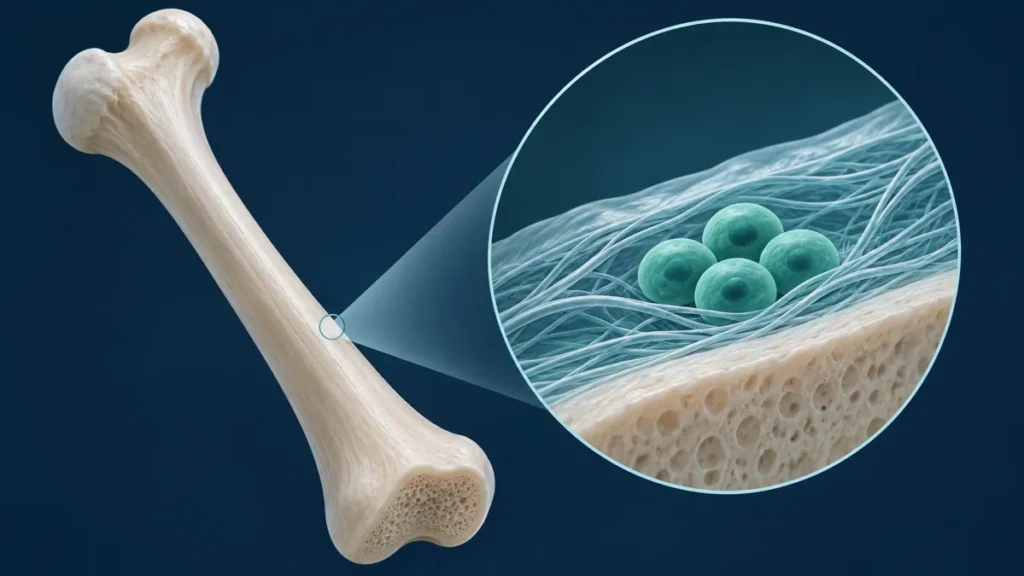
AI-generated conceptual illustration of a liver and macrophage immune cells. RTX001 is investigational; this image does not depict a treatment result or clinical microscopy.
Why researchers are studying immune cells in liver disease
Cirrhosis develops when scarring damages the liver and interferes with its work. Complications can include fluid buildup, internal bleeding and confusion. Some people eventually need a transplant, according to the National Institute of Diabetes and Digestive and Kidney Diseases.
The EMERALD trial registry describes a treatment made from the participant's own blood cells. Researchers collect monocytes, a type of white blood cell, and grow them into macrophages. These immune cells are then engineered with messenger RNA intended to strengthen their anti-inflammatory and anti-scarring activity before being returned by intravenous infusion.
RTX001 contains macrophages rather than stem cells. Its relevance to regenerative medicine is the attempt to improve the conditions for tissue repair. Whether it actually repairs a damaged liver or changes the course of disease needs clinical evidence.
Our earlier article on macrophage production from reprogrammed stem cells covered a different manufacturing approach. RTX001 instead starts with cells collected from each patient.
What the six month results showed
The researchers' conference abstract, supplied by Resolution Therapeutics, covers the first nine treated participants with six-month follow-up. It compares them with 21 participants in OPAL, a separate observational study.
| Outcome during six months | RTX001 group | External standard-care group |
|---|---|---|
| Death, liver transplant or a defined worsening of liver disease | 2 of 9 people (22%) | 8 of 21 people (38%) |
| Death or liver transplant | 1 of 9 (11%) | 4 of 21 (19%) |
| Non-liver serious adverse events | 3 of 9 (33%) | 8 of 21 (38%) |
Source: EMERALD/OPAL conference abstract. Rows overlap and should not be added together. The groups came from separate studies, not a randomized comparison.
No infusion-related serious adverse events were reported. The other serious events in the table are an important reminder that a reassuring infusion finding is not the same as treatment without risk.
Why the comparison needs caution
The OPAL registry describes a study that follows people with cirrhosis after a serious worsening of their condition. It provides context for evaluating later treatments. It is not a placebo arm within EMERALD.
The researchers used similar eligibility criteria and largely the same clinical sites. Even so, differences in illness severity, care or who entered each study could affect the results. With only nine treated participants in this analysis, one person's outcome also changes the percentage substantially.
The abstract does not provide a confidence interval for the main comparison, detailed adjustment for differences between groups, or a complete patient-level safety account. A conference abstract also offers less detail than a full clinical report. These results support further testing, not a claim that RTX001 reduces deaths or replaces transplantation.
What happens next
Resolution says 15 participants have received treatment and that the main EMERALD analysis is expected in 2028. The company also plans a December 2026 discussion with the FDA about further development. A planned regulatory meeting is not an approval.
For readers, the new value is a first look at an engineered immune-cell approach in people with advanced liver disease. Larger, better-controlled studies and longer follow-up will determine whether the early difference reflects a real benefit and what risks accompany it.