A new step in Parkinson’s cell therapy research has taken place in Japan. The first participant in a post-approval study of AMCHEPRY received a cell transplant at Kyoto University Hospital in October 2026, according to Sumitomo Pharma’s October 30 update. The company did not report that participant’s treatment response in the presentation. [1]
For families following this field, the distinction matters: a procedure has been completed, while the evidence about its longer-term effects is still being collected.

What changed this week
The announcement concerns the first transplant in AMCHEPRY’s post-marketing Phase 4 study. It is not the first time people have received this type of transplant in research. An earlier Kyoto trial began in 2018. [1, 3]
Sumitomo says the October procedure took place at Kyoto University Hospital. Its update gives the month, not an exact surgery date. The October 30 announcement date and the procedure date should therefore not be treated as the same day. [1]
What AMCHEPRY is designed to do
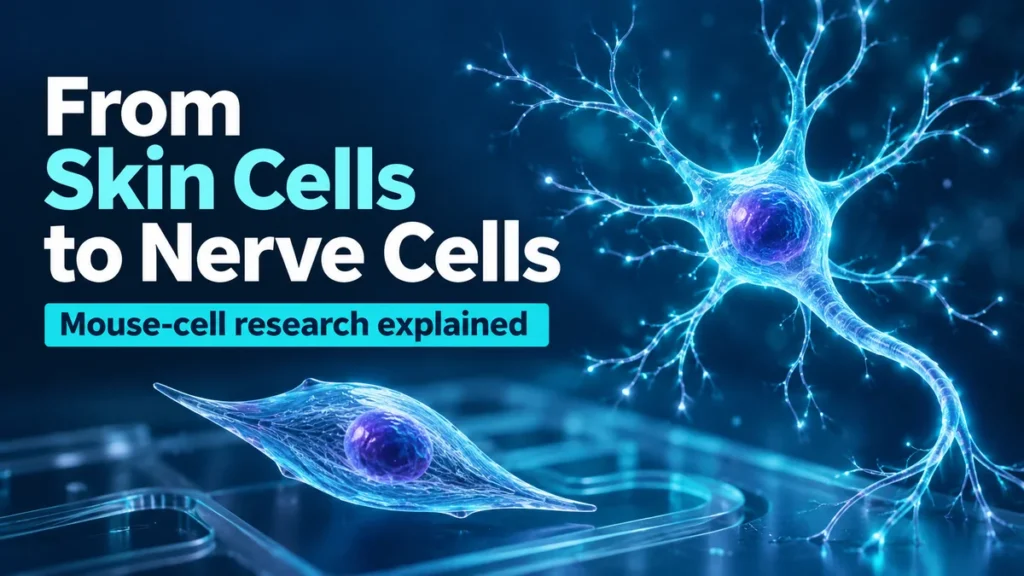
AMCHEPRY, also called raguneprocel, contains donor-derived cells made from induced pluripotent stem cells, or iPS cells. These starting cells can be guided to develop into specialized cell types. The product contains precursors of dopamine-producing nerve cells. [2]
Dopamine helps the brain control movement. Researchers are studying whether replacing some of the cells lost in Parkinson’s can help with movement symptoms. This approach does not establish a cure or address every part of the disease. [4]
For more background, see our introduction to induced pluripotent stem cells.
Conditional approval still requires follow-up evidence
Japan granted AMCHEPRY conditional and time-limited approval on March 6, 2026. The approved indication is improvement of movement symptoms in people whose Parkinson’s symptoms respond inadequately to existing medicines, including levodopa-containing products. [2]
The company says it must carry out a post-marketing clinical study and surveillance to seek full approval within the designated period. The latest transplant is a step in that process. [2]
The country and approval conditions matter. The Michael J. Fox Foundation’s October 30 overview states that raguneprocel is not approved for patients in the United States; the related U.S. program remains in clinical testing. [4]
What the earlier study showed
The underlying Kyoto Phase 1/2 study, published in Nature in April 2025, included seven participants and followed safety for 24 months. Six participants were included in the efficacy analysis. Four of those six improved on a movement examination performed while off Parkinson’s medication. [3]
Researchers reported no serious adverse events, but there were 73 mild or moderate events. Imaging found no tumor-like graft overgrowth during follow-up. These findings do not mean the treatment is risk-free. [3]
The study was small, conducted at one center, and open-label, meaning participants and investigators knew the treatment was being given. Without an appropriate control group, changes cannot confidently be attributed to the transplant alone. The authors called for larger, controlled studies. [3]
Three milestones that mean different things
| Milestone | What it tells us | What remains to be established |
|---|---|---|
| Earlier Phase 1/2 results, April 2025 | Initial safety and movement observations in a small group | How reliably findings hold up in larger, controlled studies |
| Conditional approval in Japan, March 2026 | Use is authorized under a conditional, time-limited framework | Evidence needed for full approval |
| First post-marketing study transplant, disclosed October 2026 | The new study has reached a patient-treatment milestone | Outcomes from this participant and the wider study |
Sources: earlier trial [3], approval announcement [2], October update [1]. This table compares evidence stages, not treatment success rates.
How to read the next headline
When another cell-therapy announcement appears, ask:
- Is it reporting a transplant, a regulatory decision, or measured patient outcomes?
- How many people were studied, and was there a comparison group?
- How long were participants followed?
- Which country, product, and conditions does the approval cover?
Those questions leave room for hope while keeping expectations tied to evidence. People interested in research can discuss legitimate trial options with their Parkinson’s care team and consult official trial registries. [4]
For now, this is a meaningful study milestone. The next important news will be what follow-up reveals about safety, benefit, and durability.
This article is for general information and does not recommend a treatment, clinic, or change to medical care.
Sources
1. Sumitomo Pharma. Conference on Q2 FY2026 Financial Results, October 30, 2026, slides 15–16. https://www.sumitomo-pharma.com/ir/library/presentation/assets/pdf/eir20261030.pdf
2. Sumitomo Pharma and RACTHERA. AMCHEPRY conditional and time-limited approval announcement, March 6, 2026. https://www.sumitomo-pharma.com/news/20260306.html
3. Sawamoto N, Doi D, et al. Phase I/II trial of iPS-cell-derived dopaminergic cells for Parkinson’s disease. Nature, published April 16, 2025. https://pmc.ncbi.nlm.nih.gov/articles/PMC12095070/ ; DOI 10.1038/s41586-025-08700-0.
4. The Michael J. Fox Foundation. Stem Cell Therapies for Parkinson’s Are Advancing in Clinical Trials, October 30, 2026. https://www.michaeljfox.org/news/stem-cell-therapies-parkinsons-are-advancing-clinical-trials