When people hear about stem cell therapy, one of the first questions that comes to mind is, “Where do the cells come from?” It’s a great question, and the answer is central to understanding how these treatments work.
Stem cell therapy can use either your own stem cells or cells from a qualified, screened donor. These two approaches are known as autologous and allogeneic therapy, respectively.

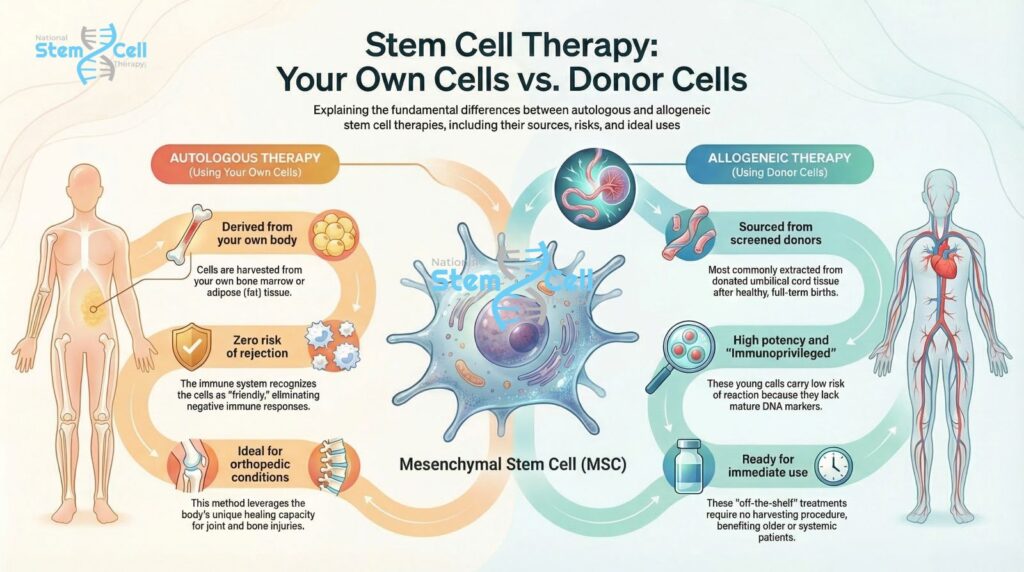
Autologous Therapy: Using Your Own Stem Cells
The word “autologous” simply means that the cells come from your own body . This is a very common approach in regenerative medicine.
In an autologous procedure, a doctor will harvest your own adult stem cells, typically from one of two sources:
1.Bone Marrow: A sample is taken from the back of your hip bone.
2.Adipose (Fat) Tissue: A mini-liposuction procedure is performed, usually on the abdomen or flank.
These tissues are then processed in a lab to isolate and concentrate the powerful Mesenchymal Stem Cells (MSCs) they contain. The concentrated cells are then injected back into your body at the site of injury or pain.
The biggest advantage of autologous therapy is zero risk of rejection. Because the cells are your own, your immune system recognizes them as friendly and there is no chance of a negative immune response .
Allogeneic Therapy: Using Donor Stem Cells
“Allogeneic” means the cells come from a source other than your own body. In regenerative medicine, the most common source of allogeneic stem cells is donated umbilical cord tissue.
After a healthy, full-term birth, a mother can choose to donate the umbilical cord, which is incredibly rich in young, potent MSCs. This tissue, which would otherwise be discarded, is sent to a lab where it is carefully screened for diseases and processed to extract the stem cells.
These cells are considered “immunoprivileged,” meaning they have a very low risk of causing an immune reaction in the recipient. They do not carry the same DNA markers as mature cells, so the recipient’s body does not see them as foreign invaders.
| Feature | Autologous (Your Own Cells) | Allogeneic (Donor Cells) |
| Source | Your own bone marrow or fat | Donated umbilical cord tissue |
| Procedure | Requires a harvesting procedure | Off-the-shelf, ready to use |
| Rejection Risk | None | Extremely low |
| Cell Potency | Varies with age and health | Young, highly potent cells |
Which One is Better?
Neither approach is universally “better”—the best choice depends on the patient’s condition, age, and the specific treatment protocol.
•Autologous therapy is often preferred for orthopedic conditions, as it leverages the body’s own unique healing capacity.
•Allogeneic therapy is often used for systemic conditions or in older patients, as it provides a high concentration of young, vibrant cells without the need for a harvesting procedure.
The Takeaway
So, does stem cell therapy use your own stem cells? The answer is often yes, but it doesn’t have to. Both autologous and allogeneic therapies are powerful tools in the world of regenerative medicine, each with its own set of advantages.
Working with a qualified physician will help determine which source of cells is the right choice to help you achieve your health goals.
References
[1] MD Anderson Cancer Center. “Autologous stem cell transplants: What to expect.”
[2] Seattle Regenerative Medicine Center. “Autologous Stem Cells vs Allogenic Stem Cells.”