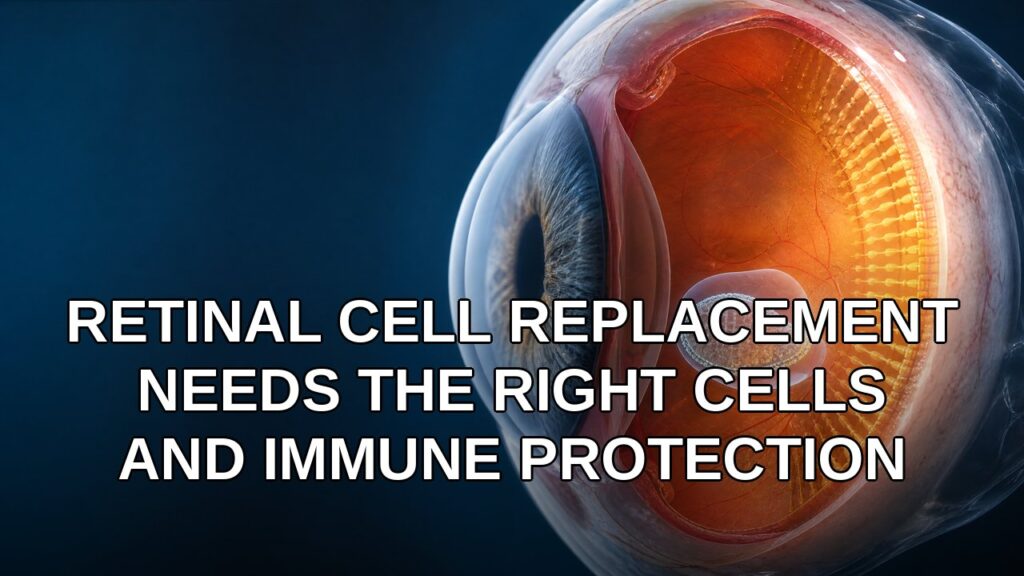
Could an off-the-shelf cell therapy help calm the immune system in lupus without the heavy step of conditioning chemotherapy?
That is the question raised by new company-reported data from Fate Therapeutics on iPSC CAR-T for lupus.1
Fate announced that it is presenting data at the 2026 American Society of Gene and Cell Therapy Annual Meeting for FT819, an off-the-shelf CD19-targeted CAR-T program made from induced pluripotent stem cells.1
The early signal is interesting.
It is also small, preliminary, and should be handled with clean language.
No hype. No miracle talk. No pretending three patients answer every question.
iPSC CAR-T for Lupus: What Was Reported
Fate Therapeutics reported data from Regimen B of a Phase 1 study of FT819 in patients with moderate-to-severe systemic lupus erythematosus, including lupus nephritis and extrarenal lupus.1
The data cutoff was April 9, 2026.1
According to the company, a single dose of FT819 without conditioning chemotherapy and with background therapy showed clinical responses at dose level 1 in active SLE patients.1
Fate reported that 3 of 3 patients achieved SRI-4, and 2 of 3 achieved lupus low disease activity state, or LLDAS.1
The company also reported B cell depletion in peripheral blood and secondary lymphoid tissue, based on nasopharyngeal swabs.1
Major B cell clones were depleted by 79% on average, with depletion lasting up to 12 months after treatment, according to the release.1
| Reported item | Detail from Fate Therapeutics |
|---|---|
| Product | FT819 |
| Platform | Off-the-shelf, CD19-targeted, iPSC-derived CAR-T |
| Disease | Moderate-to-severe systemic lupus erythematosus |
| Trial stage | Phase 1 |
| Conditioning chemotherapy | Not used in the reported Regimen B dose level 1 group |
| Reported responses | 3 of 3 achieved SRI-4; 2 of 3 achieved LLDAS |
| B cell clone finding | 79% average depletion of major B cell clones, lasting up to 12 months |
Why Conditioning Chemotherapy Matters
Many CAR-T approaches use conditioning chemotherapy before the cell infusion.
Conditioning can help make space for the infused cells, but it can add risk and burden for patients.
Fate’s announcement focuses heavily on the possibility of CAR-T activity with less-intensive or no conditioning chemotherapy.1
That is why the lupus data are getting attention.
If future trials confirm benefit without intensive conditioning, the treatment pathway could become more accessible and potentially safer.
That is the hope.
But hope still has to pass through larger trials.
What FT819 Is
FT819 is an off-the-shelf CD19-targeting chimeric antigen receptor T-cell product.1
Fate says it is manufactured from a precisely engineered clonal master induced pluripotent stem cell bank.1
The company compares this master cell bank concept to the way monoclonal antibodies can be mass produced from defined starting material.1
FT819 is intended to be uniform in composition, lower in cost of goods, and stored in inventory for on-demand availability, according to Fate.1
Those are company statements, not independent proof of clinical success.
Still, the manufacturing concept matters.
Patient-made CAR-T can be powerful, but it can also be slow, expensive, and difficult to produce consistently.
An off-the-shelf model aims to change that.
Why Lupus Is a Serious Target
Systemic lupus erythematosus is an autoimmune disease in which the immune system can attack healthy tissues.
It can affect joints, skin, kidneys, blood cells, brain, heart, and lungs.
Lupus nephritis is kidney involvement, and it can be one of the most serious forms of the disease.
Our article on stem cell therapy for lupus explains why immune-reset strategies are being explored for SLE.
The logic behind CD19 CAR-T is tied to B cells.
B cells can contribute to autoantibody production and immune system misfiring in lupus.
A CD19-targeted therapy aims at B cells.
What Makes iPSC-Derived CAR-T Different
Traditional CAR-T therapy often starts with T cells collected from an individual patient.
Those cells are engineered, expanded, tested, and returned to the same patient.
An iPSC-derived approach starts from a renewable engineered stem cell line that can be used to manufacture cell products in batches.1
That is the off-the-shelf idea.
It is like moving from custom-built furniture to a carefully controlled production line.
Custom can be beautiful, but it is slow.
A production line can improve access if quality stays high.
For more background, our guide to iPSCs and reprogrammed stem cells explains why these cells are so important to newer cell therapy platforms.
Why the Results Need Caution
The reported lupus data involve only three patients at dose level 1 in the highlighted group.1
That is far too small to draw firm conclusions about broad effectiveness or long-term safety.
The release also comes from the company developing the therapy.
That does not make the data meaningless, but it does mean readers should treat the announcement as early evidence, not final judgment.
This is where disciplined medicine matters.
A spark can start a fire, but it is not the whole fireplace.
The Role of B Cell Remodeling
Fate reported that FT819 was associated with changes in the B cell repertoire in patients with active SLE.1
The company described depletion of major B cell clones and a shift toward a less class-switched B cell receptor repertoire.1
In plain English, the therapy appears to be affecting immune cell populations involved in lupus biology.
That is scientifically interesting because lupus is driven by immune dysfunction, not a single broken part.
Still, immune remodeling must be studied carefully.
Suppressing or reshaping immune activity can help disease, but it can also affect infection risk and immune balance.
How This Fits With Other Autoimmune Cell Therapy Research
Cell therapy for autoimmune disease is one of the most active frontiers in regenerative medicine and immunotherapy.
The idea is not simply to block one symptom.
The bigger goal is to reset or remodel disease-driving immune cells.
That is why CAR-T approaches, stem cell transplant strategies, and iPSC-derived cell platforms are being watched closely.
Our coverage of multiple sclerosis and immune resetting gives a broader look at why immune system reset strategies matter in autoimmune conditions.
But lupus is not multiple sclerosis, and one disease’s results cannot be pasted onto another.
Every condition needs its own data.
What Patients Should Ask Before Getting Excited
Patients with lupus should not interpret this announcement as an available treatment option outside research.
They should use it as a discussion point with a rheumatologist or clinical trial team.
| Question | Why it matters |
|---|---|
| Is FT819 approved for lupus? | The reported study is Phase 1, not routine care. |
| What risks were seen in the trial? | Early announcements may not answer every safety question. |
| How many patients have been treated? | Small datasets can look promising before larger trials test them. |
| Does the study include lupus nephritis? | Fate says the Phase 1 study includes lupus nephritis and extrarenal lupus. |
| Would conditioning chemotherapy be required? | The highlighted regimen did not use conditioning chemotherapy. |
Our guide on how to prepare for a stem cell therapy consultation can help patients organize questions before discussing advanced therapies.
Bring curiosity, but do not leave your critical thinking at the door.
What We Will Watch Next
Fate reported that treatment at a higher dose of 900 million cells, called dose level 2, has been initiated.1
That next dose level matters because early dose groups often guide later development.
The field will need more patients, longer follow-up, peer-reviewed data, and clearer safety reporting.
We will also want to see whether responses are durable and whether benefits hold across different lupus subtypes.
Most of all, we need to know whether the risk-benefit profile makes sense for real patients.
A therapy can look powerful and still be too risky for some people.
That is not pessimism.
That is medicine doing its job.
Moving Forward
Fate’s FT819 data add to the growing conversation about off-the-shelf iPSC-derived CAR-T therapy for autoimmune disease.1
The reported early lupus results are promising enough to watch closely, especially because the highlighted regimen did not use conditioning chemotherapy.1
But this is still early Phase 1 company-reported data from a very small patient group.
The right response is not hype.
The right response is informed attention.
Patients deserve hope that can stand up straight under the weight of facts.